
Transmisje na żywo z kamer bielików amerykańskich
| Texas Eagle Cam aktywna listopad-marzec | |
| KNF Eagle Cam aktywna grudzień-kwiecień | Hays Eagle Cam aktywna styczeń-maj |
| USS Eagle Cam aktywna styczeń-maj | Decorah Eagle Nest aktywna luty-czerwiec |
| Berry Eagles aktywna styczeń-maj | SW Florida Eagle Nest aktywna listopad-marzec |
| Big Bear Eagle Nest aktywna koniec stycznia-lipiec | Decorah North Nest aktywna luty-czerwiec |
| Notre Dame Bald Eagles aktywna luty-czerwiec | Duke Farms Eagles aktywna styczeń-maj |
| MN DNR Nest aktywna luty-czerwiec | NCTC Eagle Cams aktywna luty-czerwiec |
| Fort St.
Vrain Eagles aktywne od lutego do czerwca | więcej Transmisje na żywo z dziką przyrodą |
O orłach bielikach
Kiedyś licznie występujący gatunek, bielik amerykański został wybrany narodowym ptakiem Stanów Zjednoczonych w 1782 roku. Jednak w XX wieku populacja tego majestatycznego ptaka gwałtownie spadła z powodu stosowania pestycydów, nadmiernych polowań oraz zanieczyszczenia rzek. Opracowano jednak skuteczny plan odbudowy, dzięki któremu obecnie bielik amerykański jest proponowany do usunięcia z listy gatunków zagrożonych. Ta lista umożliwia oglądanie gniazd z całych Stanów Zjednoczonych i obserwowanie odrodzenia się tego wspaniałego gatunku.
Jak odróżnić samca od samicy?
Samica bielika amerykańskiego jest większa i ma dłuższą rozpiętość skrzydeł. Jej tylny pazur (pazur halluksowy) jest również dłuższy, a dziób większy i dłuższy. W rzeczywistości dziób samicy może zaczynać się nawet za okiem, podczas gdy u samca niekoniecznie tak jest. Oglądając kamery z bielikami amerykańskimi, łatwo zauważyć wyraźną różnicę między samcem a samicą.
Charakterystyka fizyczna
Długość: 71–96 cm
Masa ciała: 3,0–6,5 kg
Migracja: częściowy migrant
Siedlisko: w pobliżu wody, w tym rzeki, a także jeziora i tereny nadmorskie do wysokości 2000 m n.p.m.
Populacja: rzadka
Liczebność i wzrost populacji:
Obecnie szacuje się, że w kontynentalnych Stanach Zjednoczonych gniazduje ponad 6 000 par lęgowych bielika amerykańskiego, a w Kanadzie i na Alasce jest ich znacznie więcej. W rzeczywistości niektóre organizacje, które instalują i obsługują kamery z bielikami, monitorują liczebność oraz rozwój lokalnej populacji bielika amerykańskiego.
Jak duże są jaja bielika amerykańskiego?
Jaja bielika amerykańskiego są mniej więcej wielkości piłki tenisowej, ale mają oczywiście owalny kształt, jak to zwykle bywa z jajami. Jedno jajo bielika waży 120–130 gramów. Dla porównania, duże jajko kurze waży około 50 gramów. (28 gramów = 1 uncja) Podczas oglądania kamer z gniazd bielika często można zobaczyć zbliżenia, które pozwalają przyjrzeć się jajom z większą dokładnością podczas sesji z zoomem.
Informacje o dokarmianiu zimą:
Od momentu wyklucia się piskląt do opuszczenia gniazda przez młode bieliki mija około 10 do 13 tygodni. Oczywiście kamery obserwujące bieliki śledzą ten proces od początku do końca.
Kiedy młode orlęta odbędą swój pierwszy lot?
Zimą duże skupiska bielików gromadzą się na tarliskach łososi, pstrągów i innych ryb rzecznych. Bieliki rywalizują tam z innymi drapieżnymi ptakami oraz niedźwiedziami o martwe i umierające ryby. Niektóre kamery z bielikami wyposażone są w kamery PTZ, które pozwalają obserwować miejsca inne niż samo gniazdo.
Który orzeł poluje na jedzenie?
Obydwa polują. Samica może częściej przebywać na gnieździe podczas wysiadywania jaj.
Czy kamery używane przy gnieździe orłów świecą światłem na orła przez całą noc?
Rzeczywiście, przez całą noc świeci na nie światło z kamery. Jednak światło z kamery to podczerwień, której nie widzą ani ludzie, ani zwierzęta. Tylko kamery są w stanie je zarejestrować. Na przykład, gdybyś podszedł nocą do tego gniazda, na zewnątrz panowałaby całkowita ciemność. W rzeczywistości prawie każda kamera obserwująca bieliki amerykańskie ma taką funkcję.
Jak wygląda bielik amerykański:
Dorosły Bielik jest nie do pomylenia dzięki charakterystycznej białej głowie, żółtym oczom, dziobowi i łapom, które wyraźnie kontrastują z ciemnobrązowymi skrzydłami i grzbietem. Upierzenie młodych osobników nie jest jednak tak rozpoznawalne jak u dorosłych i czasami może być mylone z orłem przednim. Młode bieliki osiągają pełne, dorosłe upierzenie dopiero w wieku 4 lat. Oczywiście im częściej oglądasz kamery z bielikami, tym łatwiej nauczysz się rozróżniać samca od samicy. Czytanie komentarzy pod każdą transmisją na żywo lub zadawanie pytań to także świetny sposób, by dowiedzieć się więcej o bielikach.
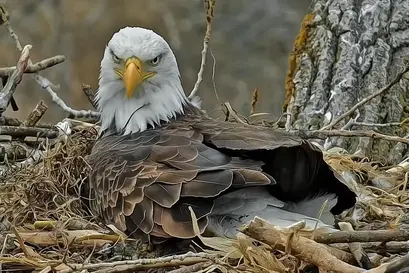
Co dzieje się ze wszystkimi niejadalnymi resztkami?
Większość rzeczy, których nie zjadają – pióra, kości itp. – pozostaje w gnieździe.
Najnowsze wpisy:
Czym jest pip?
Pip to maleńki otwór, który pisklę orła wykuwa swoim „zębem jajowym” (ostrą końcówką na czubku dzioba) w zewnętrznej skorupce jaja, gdy zaczyna się wykluwać.
Ciekawostka:
Bieliki amerykańskie w rzeczywistości nie są łyse, jak sugeruje ich nazwa, lecz zawdzięczają ją temu, że ich głowa pokryta jest białymi piórami, co w zestawieniu z ciemnym upierzeniem reszty ciała sprawia wrażenie łysiny.
Zobacz mapę zasięgu pokazującą, gdzie występują bieliki, na stronie allaboutbirds.org