
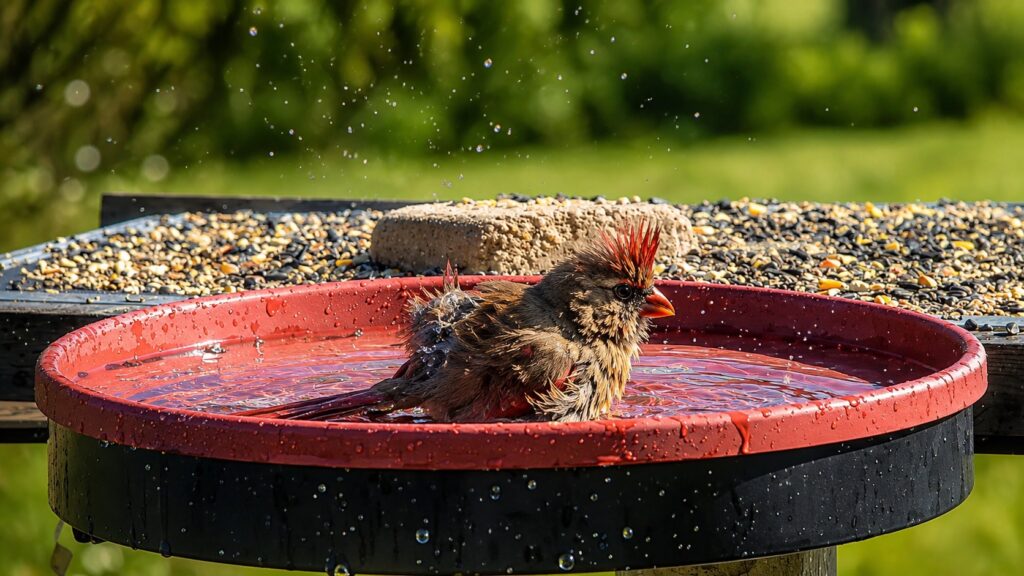
To orzeźwiające poidełko dla ptaków w ogrodzie podczas fali upałów w czerwcu może wyrządzać więcej szkody niż pożytku.
Chociaż wydaje się to aktem życzliwości, stojąca woda podczas fali upałów może szybko zamienić się w „pułapkę” dla dzikiej przyrody, której próbujesz pomóc.
Ptaki potrzebują wody, gdy temperatury gwałtownie rosną. Pszczoły potrzebują bezpiecznych miejsc do picia. Małe zwierzęta żyjące na poziomie gruntu mogą mieć trudności, gdy naturalne źródła wody wysychają.
Jednak niewłaściwe ustawienie może stworzyć ukryte zagrożenia.
Poidełko dla ptaków, które jest zbyt głębokie, brudne, nagrzane lub zbyt odsłonięte, może zamienić Twój ogród w miejsce problematyczne.
Dobra wiadomość jest taka, że większość z tych błędów można łatwo naprawić już dziś.
Problem brudnej wody: kiedy poidełko dla ptaków zamienia się w kałużę kłopotów
Ciepła, stojąca woda szybko się zmienia. Dlatego bezpieczeństwo poidełka dla ptaków podczas fali upałów w ogrodzie zaczyna się od czystej, świeżej wody.
Podczas fali upałów poidełko dla ptaków może w krótkim czasie zebrać odchody, pióra, kurz, liście, glony i bakterie.
Ptaki nie tylko piją z poidełek dla ptaków. Stają w nich, pluskają się, kąpią i czyszczą swoje pióra.
To sprawia, że utrzymanie czystości jest jednym z najważniejszych elementów pomagających ptakom w ogrodzie przetrwać falę upałów.
Jeśli woda wygląda na mętną, zieloną, śliską lub jest zanieczyszczona resztkami, wylej ją.
Następnie wyszoruj misę poidełka, dokładnie ją wypłucz i napełnij świeżą wodą.
Dokładne czyszczenie raz w tygodniu jest ważne, ale podczas fali upałów jeszcze lepiej sprawdza się codzienne płukanie i uzupełnianie wody. RSPB również zaleca, aby poidełka dla ptaków były regularnie czyszczone i napełniane, zwłaszcza w czasie upałów.
Pomyśl o tym tak: jeśli nie chciałbyś, żeby rudzik kąpał się w tej wodzie, prawdopodobnie rudzik nie powinien jej też pić.
Pułapka głębokiej wody: dlaczego głębokość może być niebezpieczna
Wiele ozdobnych poidełek dla ptaków powstaje z myślą o stylu ogrodu, a nie o bezpieczeństwie ptaków.
Mogą wyglądać pięknie, ale głęboka, gładka misa poidełka dla ptaków może być trudna do użycia dla małych ptaków.
Małe ptaki potrzebują płytkich brzegów, na których mogą bezpiecznie stanąć.
Pisklęta i mniejsi goście mogą mieć trudności, jeśli ścianki są śliskie lub woda jest zbyt głęboka.
Rozwiązanie jest proste.
Dodaj czyste kamienie, otoczaki lub delikatnie nachylony kamień do misy poidełka dla ptaków.
To zapewnia ptakom bezpieczne miejsce do przesiadywania oraz tworzy płytsze strefy do picia i kąpieli.
Poidełko dla ptaków nie musi wyglądać jak luksusowa fontanna. Powinno działać jak bezpieczny brzeg.
Błąd pełnego słońca: gorąca woda niewiele pomoże
Poidełko dla ptaków stojące w pełnym popołudniowym słońcu może bardzo szybko się nagrzać.
To oznacza, że woda szybciej odparowuje, szybciej się nagrzewa i łatwiej mogą rozwijać się w niej glony.
Jeśli to możliwe, ustaw poidełko dla ptaków w półcieniu.
Miejsce w pobliżu krzewów lub niewielkich drzew jest często idealne, ponieważ ptaki lubią podchodzić do wody z ukrycia.
Ptaki mogą przysiąść w pobliżu, rozejrzeć się za zagrożeniem, a następnie podlecieć do poidełka, gdy poczują się bezpiecznie.
Tylko nie ustawiaj poidełka w gęstych zaroślach, gdzie koty mogą się skradać w pobliżu.
Ptaki potrzebują schronienia, ale równie ważna jest dla nich możliwość szybkiej ucieczki.
Błąd z poidełkiem dla pszczół: Otwarta woda może stać się małym basenem
Pszczoły również potrzebują wody, szczególnie podczas gorącej, suchej pogody.
Ale zwykła miska z wodą nie zawsze jest dla nich bezpieczna.
Pszczoły potrzebują miejsc do lądowania.
Bez kamieni, żwiru lub szklanych kulek wystających ponad poziom wody, poidełko dla pszczół może stać się zagrożeniem utonięcia.
Użyj płytkiego spodka i wypełnij go czystymi kamykami.
Następnie dodaj tyle wody, aby pszczoły mogły pić spomiędzy kamieni, stojąc bezpiecznie ponad powierzchnią.
Odświeżaj je często.
Jeśli misa zrobi się śliska lub zacznie przyciągać komary, wylej wodę, wyszoruj ją i napełnij od nowa.
Najlepsze poidełko dla pszczół nie musi być wymyślne. Powinno być płytkie, czyste i pełne małych wysepek do lądowania.
Luka na poziomie gruntu: nie tylko ptaki mają trudności
Poidełko dla ptaków pomaga ptakom, ale nie każde spragnione zwierzę może do niego sięgnąć.
Podczas suszy również inna dzika przyroda żyjąca na poziomie gruntu może potrzebować wody.
Dla dzikiej przyrody żyjącej na ziemi ustaw płytką, ciężką miskę z świeżą wodą w cichym, zacienionym miejscu.
Świeża woda to najbezpieczniejszy wybór.
Miska powinna być na tyle niska, aby małe zwierzęta mogły do niej sięgnąć, a jednocześnie na tyle stabilna, by nie przewracała się łatwo.
Unikaj głębokich wiader, naczyń o stromych ściankach lub wszystkiego, do czego zwierzę mogłoby wpaść i nie być w stanie się wydostać.
Jeśli używasz większego pojemnika gdziekolwiek w swoim ogrodzie, dodaj solidną drogę ucieczki, na przykład kamienie, rampę lub gałąź.
Źródło wody nigdy nie powinno stać się pułapką.
Ryzyko chemiczne: czystość nie powinna oznaczać szkodliwości
Czyste poidełko dla ptaków to dobra rzecz.
Poidełko dla ptaków z chemikaliami nie jest odpowiednie.
Unikaj stosowania silnych środków czyszczących oraz pozostawiania resztek mydła.
Po wyszorowaniu dokładnie opłucz misę poidełka dla ptaków przed ponownym napełnieniem wodą.
Unikaj również ustawiania misek z wodą dla dzikiej przyrody w pobliżu świeżo opryskanych roślin, traktowanych trawników lub miejsc, gdzie może gromadzić się spływ chemikaliów.
Podczas fali upałów dzika przyroda jest już narażona na stres.
Woda, którą oferujesz, powinna być prosta: świeża, czysta, płytka i bezpieczna.
Błąd „Ustaw i zapomnij”
Jedna miska z wodą może pomóc.
Ale podczas fali upałów liczy się regularność.
Małe miski szybko wysychają, zwłaszcza na słońcu lub przy wietrze.
Sprawdź wodę rano, a następnie ponownie później w ciągu dnia, jeśli temperatury są wyjątkowo wysokie.
Jeśli wychodzisz z domu na cały dzień, ustaw dodatkowe płytkie miski z wodą w zacienionych miejscach.
Kilka małych, bezpiecznych źródeł wody często sprawdza się lepiej niż jedno duże, ryzykowne.
Jeśli wyjeżdżasz na dłużej niż jeden dzień, poproś sąsiada, aby uzupełnił poidełka.
Kiedy dzika przyroda znajdzie bezpieczne źródło wody, może wracać do niego wielokrotnie.
Nie pozwól, aby oaza wyschła w najgorętszej porze dnia.
Lepszy sposób na falę upałów: wpraw wodę w ruch
Zamiast polegać na popularnych trikach ogrodowych z internetu, wypróbuj bezpieczniejsze rozwiązanie: utrzymuj wodę w ruchu.
Mała fontanna solarna lub kropelkowy dozownik mogą pomóc ograniczyć zastój wody i sprawić, że poidełko będzie bardziej atrakcyjne dla ptaków.
Płynąca woda jest łatwiejsza do zauważenia przez ptaki.
Woda w poidełku również dłużej pozostaje świeża niż stojąca woda.
To nie zastępuje czyszczenia.
Nadal musisz regularnie płukać, szorować i uzupełniać poidełko dla ptaków świeżą wodą.
Jednak odrobina ruchu może zamienić ospałą, problematyczną kałużę w bardziej ożywione i bezpieczne miejsce w ogrodzie.
60-sekundowy przegląd dzikiej przyrody w ogrodzie
Przed nadejściem najgorętszej części dnia zrób szybkie sprawdzenie poidełka dla ptaków w ogrodzie podczas fali upałów.
Czy poidełko dla ptaków jest czyste?
Czy woda jest płytka?
Czy są kamienie dla małych ptaków i owadów?
Czy poidełko dla ptaków jest częściowo zacienione?
Czy istnieje miska z wodą na poziomie gruntu dla drobnej dzikiej przyrody?
Czy z każdego pojemnika łatwo się wydostać?
Ta jednominutowa kontrola może zapobiec wielu najczęstszym błędom popełnianym podczas fali upałów.
To także pozwala szybko zauważyć ewentualne problemy, zanim woda stanie się brudna lub całkowicie wyschnie.
Bezpieczniejsze rozwiązanie dla ptaków, pszczół i dzikiej przyrody w ogrodzie
Dobre poidełko na czas fali upałów powinno być płytkie, zacienione, czyste i łatwe do opuszczenia.
Dla ptaków użyj poidełka dla ptaków lub płytkiego naczynia z świeżą wodą i stabilnym podłożem.
Dla pszczół użyj spodka z kamykami, które wystają ponad poziom wody.
Dla innych gości odwiedzających ogród na poziomie gruntu użyj niskiej, ciężkiej miski z wodą, ustawionej w cichym, zacienionym miejscu.
Trzymaj zwierzęta domowe z dala, jeśli to możliwe.
Trzymaj wodę z dala od chemikaliów.
Utrzymuj pojemniki w czystości.
Możesz również pomóc, pozwalając części swojego ogrodu nieco zdziczeć.
Wysoka trawa, liściaste krzewy, rodzime rośliny oraz niezakłócone zakątki ogrodu zapewniają dzikiej przyrodzie chłodniejsze miejsca do ukrycia się.
Podczas fali upałów nawet idealnie zadbany ogród może stać się gorący i pozbawiony cienia.
Nieco bardziej dziki może stać się schronieniem.
Zobacz, jak ptaki naprawdę korzystają z wody i karmników
Jednym z najlepszych sposobów, aby zrozumieć, czego ptaki potrzebują podczas upałów, jest uważna obserwacja ich zachowań.
Transmisje na żywo z poidełka dla ptaków i karmnika pozwalają zobaczyć, jak często ptaki piją wodę, w jaki sposób podchodzą do poidełka oraz jak szybko intensywnie używane źródło wody może się zabrudzić.
Możesz oglądać na żywo poidełka dla ptaków oraz karmniki tutaj: link do centrum kamer na żywo
Następnie wróć do własnego ogrodu z nowym spojrzeniem. Im więcej dostrzegasz, tym łatwiej zauważysz, kiedy poidełko wymaga czyszczenia, cienia lub bezpieczniejszego ustawienia.
Podsumowanie
Twoje poidełko dla ptaków w ogrodzie zdecydowanie może pomóc ptakom podczas fali upałów.
Ale tylko wtedy, gdy pozostaje czyste, płytkie, zacienione i bezpieczne.
Niebezpieczeństwo nie tkwi w samym poidełku dla ptaków.
Niebezpieczeństwo stanowi stojąca woda, głębokie misy, śliskie brzegi, ustawienie w pełnym słońcu oraz zapominanie, że pszczoły i dzika przyroda żyjąca na poziomie gruntu potrzebują innego rodzaju wsparcia.
Kilka drobnych zmian może zamienić Twój ogród w bezpieczniejsze letnie schronienie.
Świeża woda rano. Kamienie jako podparcie. Cień w najgorętszych godzinach. Szybkie czyszczenie, gdy misa wygląda na zabrudzoną.
Dzika przyroda nie potrzebuje wielkiej akcji ratunkowej.
Czasem wystarczy czysta woda do picia, bezpieczne miejsce do lądowania i ogród, który nie został zamieniony w pustynię.
FAQ
Jak często powinienem czyścić poidełko dla ptaków w ogrodzie podczas fali upałów?
Podczas fali upałów codziennie, jeśli to możliwe, przepłukuj i uzupełniaj poidełko dla ptaków, zwłaszcza gdy ptaki intensywnie z niego korzystają. Dokładniejsze czyszczenie przynajmniej raz w tygodniu pomaga ograniczyć rozwój glonów, nagromadzenie odchodów, bakterii i innych zanieczyszczeń.
Czy poidełko dla ptaków powinno stać w słońcu czy w cieniu?
Półcień jest zazwyczaj najlepszy podczas upałów. Cień utrzymuje wodę w poidełku dla ptaków w niższej temperaturze, spowalnia parowanie i może ograniczyć rozwój glonów. Ptaki lubią też mieć w pobliżu krzewy lub drzewa, które zapewniają im schronienie, ale unikaj ustawiania poidełka tam, gdzie koty mogą się łatwo ukryć.
Jak głębokie powinno być poidełko dla ptaków?
Poidełko dla ptaków powinno być płytkie, szczególnie przy brzegach. Dodaj czyste kamienie, żwir lub nachylony kamień, aby mniejsze ptaki mogły bezpiecznie stać podczas picia lub kąpieli.
Czy mogę wystawić wodę dla pszczół?
Tak. Pszczoły mogą skorzystać z płytkiego źródła wody, ale potrzebują bezpiecznych miejsc do lądowania. Użyj spodka z kamykami, kamieniami lub kulkami szklanymi, które wystają ponad powierzchnię wody, aby pszczoły mogły pić, nie wpadając do środka.
Czy brudna woda w poidełku dla ptaków jest niebezpieczna dla ptaków?
Brudna woda w poidełku dla ptaków może zwiększać ryzyko chorób, zwłaszcza podczas upałów. Jeśli woda jest mętna, śliska, zielona lub zanieczyszczona odchodami, wylej ją, dokładnie wyczyść poidełko, dobrze je wypłucz i napełnij świeżą wodą.
Jaki jest najbezpieczniejszy sposób na poidełko dla ptaków w ogrodzie podczas fali upałów?
Najbezpieczniejszy „trik” jest prosty: utrzymuj wodę płytką, zacienioną, świeżą i – jeśli to możliwe – w ruchu. Mała fontanna solarna lub kapiąca woda mogą pomóc ograniczyć zastój, ale nie zastąpią regularnego czyszczenia.